LMFAO.
Sexy and I Know It.
A video.
Friday, September 16, 2011


"This can't be life."
A Moment of Clarity.
| The Colbert Report | Mon - Thurs 11:30pm / 10:30c | |||
| Jobs Bill Clipgate | ||||
| ||||
Thursday, September 15, 2011
Strength, Courage, & Wisdom.
A Moment of Clarity.

Words.
"...In all the sound and fury over Social Security over the last few weeks, the Texas governor has never actually spelled out how he would fix the program. Nor have most of the other candidates who trumpet their purported courage in saying that Social Security is in trouble.
That's what's been wrong with the noisy GOP "debate" on our national pension plan. It's been all chest-thumping and Ponzi-scheming — lots of attitude but little substance. It's provided little clarity for voters who want to know what these potential presidents would do if elected.
Not that President Obama has done much better; he's tiptoed around endorsing specific proposals too.
If Social Security is no longer the third rail of American politics (meaning "fatal to anyone who touches it"), somebody forgot to tell our leading politicians.
...The hard part, for politicians, is telling voters what painful steps they back, which means spelling out who would pay what share of the cost.
...Last year, the co-chairmen of Obama's own deficit-reduction commission, Alan Simpson and Erskine Bowles, proposed a plan with options from both sides of the menu: increase payroll taxes, raise the retirement age, reduce future benefits for high-income earners and trim cost-of-living increases for current recipients.
...If we fix Social Security between now and 2036, the solution is likely to look something like what Simpson and Bowles proposed — after suitable wrangling over how big each component should be.
Meanwhile, let's have a truce on calling Social Security a Ponzi scheme, promising voters that benefits will never be cut, or claiming that it takes courage to talk about the subject at all.
Most Americans already agree that Social Security needs to be fixed. The courage will come in showing them how."
LOS ANGELES TIMES: McManus: Touching the 'third rail'
"DUMB IT DOWN!"
Same script. Different Cast.
Words.
"Republicans have sometimes mistaken anti-elitism with anti-smarts. Put differently, Republicans should not have contempt for the voters or for ideas, lest they be judged unworthy of serving in office. It’s one thing to heap scorn on liberal elites who parrot unsupportable leftist dogma or who show contempt for ordinary Americans’ values; it’s quite another to celebrate ignorance. We’ve had two rather appalling examples in 24 hours, which I would suggest, are perfect examples of what conservatives should reject.
...Now before every Perry backer pulls out a self-deprecating comment that George W. Bush made about his syntax or that Ronald Reagan made about his grades, they should stop and think. Does Perry have a gravitas problem? Has he counteracted it with any serious policy proposals? Has he shown himself to be knowledgeable and mature in the debates? Nope. He’s just reveling in the scorn because he has mistaken mainstream (and some conservative) media criticism for confirmation that he really is doing something right. But what if, for example, a really smart Republican with a great track record, lots of policy ideas and the ability to counteract the stereotype of Republicans ran? Oh, maybe there already is one or two in the race. Maybe there could be more, and perhaps conservatives would be relieved not to have to make excuses for candidates who think ignorance is virtue and intelligence is a vice."
THE WASHINGTON POST: GOP should not fall into the trap of being proudly ignorant
"All I do is win!(?)"
A Moment of Clarity.

Words.
"The Republican establishment is said to have grave qualms about Texas Gov. Rick Perry’s presidential campaign. Here’s the problem: There is no Republican establishment. It squandered its authority by building up the Tea Party’s brigades and then fearing them too much to do anything to check their power.
Worse for those who think Perry would be a general-election
disaster is the growing confidence among conservatives that President
Obama will be easy to beat. This feeling will be bolstered by Tuesday’s special election
that sent a Republican to Congress from New York’s 9th District for the
first time since 1923. If Obama is going to lose anyway, many
conservatives reason, why not go with their hearts?
No, if Perry is to be defeated, he will have to do the job himself. And the week’s most important political news is that he might do just that.
...if conservatives see New York’s 9th as further evidence that Obama is a pushover, Rick Perry — if he doesn’t self-destruct — will be able to tell them he is the guy who can destroy the Great Society, the New Deal and the Progressive Era with one decisive blow. And no establishment will be there to stop him"
THE WASHINGTON POST: The GOP establishment’s Rick Perry problem

Words.
"The Republican establishment is said to have grave qualms about Texas Gov. Rick Perry’s presidential campaign. Here’s the problem: There is no Republican establishment. It squandered its authority by building up the Tea Party’s brigades and then fearing them too much to do anything to check their power.
No, if Perry is to be defeated, he will have to do the job himself. And the week’s most important political news is that he might do just that.
...if conservatives see New York’s 9th as further evidence that Obama is a pushover, Rick Perry — if he doesn’t self-destruct — will be able to tell them he is the guy who can destroy the Great Society, the New Deal and the Progressive Era with one decisive blow. And no establishment will be there to stop him"
THE WASHINGTON POST: The GOP establishment’s Rick Perry problem

Wednesday, September 14, 2011


Tuesday, September 13, 2011
Wait, what?
ONSMASH: "Go behind the scenes on the set of "Alligator Boots" the new puppet show
produced by Kanye West, Daniel Kellison & Rhymefest. With special
guest Kim Kardashian."
HIM: "Okay."
HIM: "Okay."


Monday, September 12, 2011


HANGIN' TOUGH!

"Don't just talk about. BE ABOUT IT!"
Words.
"Our political system is not accustomed to the kind of battle going on now. President Obama has been slow to adjust to it. The voters are understandably mystified and frustrated by it. In the meantime, the economy sits on the edge of stagnation and something worse.
...Now we face a fundamental divide over the most basic questions: Is government good or bad? Can public action make the private economy work better, or are all efforts to alter the market’s course — by Congress, the president, the Federal Reserve — doomed to failure?
When politicians and their supporters believe the other side is pursuing policies that would destroy all they cherish, compromise becomes not a desirable expedient but “almost treasonous,” to use the phrase tossed about by Gov. Rick Perry of Texas.
Under these circumstances, taking enormous risks with the country’s well-being, as House Republicans did in the debt-ceiling rumble, is no longer out of bounds. It’s a form of patriotism. When your adversaries’ ideas are so dastardly, it’s better to court chaos, win the fight and pick up the pieces later.
And to make matters worse — and more confusing — the two sides are not equally distant from the political center. We are in an age of asymmetric polarization.
...The president seems to have awoken to the danger he faces. In his speech to Congress, he pointedly addressed those who believe “that the only thing we can do to restore prosperity is just dismantle government, refund everybody’s money, and let everyone write their own rules, and tell everyone they’re on their own.” He added: “That’s not who we are. That’s not the story of America.”
But that is precisely who most of the Republican Party now thinks we are.
The president has offered eloquent defenses of the role of government in the past, only to revert to bipartisan fantasies that, in the end, always make him look weaker. The central question — for his jobs plan and his future — is whether this time he sticks with an analysis of the nature of our political fight that sees it as it is, not as he wishes it were."
THE WASHINGTON POST: How much has Obama learned?


Sunday, September 11, 2011

Friday, September 09, 2011

Try A Little Tenderness.
Starring Eddie Vedder & Kurt Cobain.
FLAVORWIRE: Here Is a Video of Kurt Cobain and Eddie Vedder Slow Dancing
FLAVORWIRE: Here Is a Video of Kurt Cobain and Eddie Vedder Slow Dancing
Michael Jackson.
A video.
Starring Das Racist.
FLAVORWIRE: Das Racist’s “Michael Jackson” Video = MJ’s “Black or White” Video
Starring Das Racist.
FLAVORWIRE: Das Racist’s “Michael Jackson” Video = MJ’s “Black or White” Video
Thursday, September 08, 2011


Wednesday, September 07, 2011


The Talk.
A Moment of Clarity.

Words.
"... It is a great week for truth-telling.
Can you remember the last time you felt a national leader looked us in the eye and told us there is no easy solution to our major problems, that we’ve gotten into this mess by being self-indulgent or ideologically fixated over two decades and that now we need to spend the next five years rolling up our sleeves, possibly accepting a lower living standard and making up for our excesses?
For me, this is the most important thing to say both on the anniversary of 9/11 and on the eve of President Obama’s jobs speech. After all, they are intertwined. Why has this been a lost decade? An answer can be found in one simple comparison: How Dwight Eisenhower and his successors used the cold war and how George W. Bush used 9/11. America had to face down the Russians in the cold war. America had to respond to 9/11 and the threat of Al Qaeda. But the critical difference between the two was this: Beginning with Eisenhower and continuing to some degree with every cold war president, we used the cold war and the Russian threat as a reason and motivator to do big, hard things together at home — to do nation-building in America. We used it to build the interstate highway system, put a man on the moon, push out the boundaries of science, teach new languages, maintain fiscal discipline and, when needed, raise taxes. We won the cold war with collective action.
George W. Bush did the opposite. He used 9/11 as an excuse to lower taxes, to start two wars that — for the first time in our history — were not paid for by tax increases, and to create a costly new entitlement in Medicare prescription drugs.
...We used the cold war to reach the moon and spawn new industries. We used 9/11 to create better body scanners and more T.S.A. agents. It will be remembered as one of the greatest lost opportunities of any presidency — ever.
...My fervent hope is that on Thursday Mr. Obama will set an example and tell the cold, hard truth — to parents and kids. I know. Honesty, we are told, is suicidal in politics. But as long as every solution that is hard is off the table, then our slow national decline will remain on the table.
...For once, Mr. President, let’s start a debate with the truth. Tell us what you really think will be required to get us out of this stagnation, what kind of collective action and shared sacrifice will be needed and why that can lead not just to muddling through, not just to being O.K., but to restoring American greatness."
THE NEW YORK TIMES: The Whole Truth and Nothing But
JOBS.
A Moment of Clarity.

Words.
"The marvelous paradox of politics is that it is the only field in which lack of experience is considered a job qualification. Or, conversely, in which extensive experience is cited as a negative.
...the attack on the “career politician” is as misguided as it is familiar. Your career politician is my devoted public servant.
Imagine this line of argument applied to another job. “Unlike my competition, I haven’t spent my life in the oil industry,” an aspirant to the chief executive post at Exxon Mobil announces. “I’m no career retailer,” crows a would-be Wal-Mart head.
...My point isn’t that previous political experience is a necessary qualification for elective office, even high elective office. It’s not. Indeed, it’s healthy to have a mixture of experiences and backgrounds — a Congress that includes former doctors and business executives along with former state legislators and ex-governors. Politics isn’t rocket science; it doesn’t require an advanced degree or specialized expertise.
But neither is political experience irrelevant — or the negative that Romney, Palin & Co. imply.
...As James Madison wrote in Federalist 62: “A good government implies two things: first, fidelity to the object of government, which is the happiness of the people; secondly, a knowledge of the means by which that object can be best attained.”
In other words: Wanting to do the right thing doesn’t matter if you don’t know how to get it done. The political short-timer has little interest in forging relationships or building the coalitions necessary for productive compromise. The reviled “career politician” may have been around long enough to see this play before. The more complicated the issues, from health care to defense spending, the more valuable the institutional knowledge.
...Experience matters, even in politics. This is why Vice President Biden, with long-standing relationships in Congress, brings value to the Obama White House. It is why governorships have proved to be such an effective preparation for the presidency.
No “career politician” — that is, no one who’s managed to win reelection — is going to be dumb enough to run an ad promoting himself as such. Surely, Romney won’t be the last candidate to deploy the career politician epithet against a threatening opponent.
But every time this phrase is used, it’s worth wondering why the attacker professes to so disdain the very vocation he so avidly seeks."
THE WASHINGTON POST: Those career politicians

Tuesday, September 06, 2011


SHINE.
"New flava in ya ear!" productions, starring Glass Candy.

PITCHFORK: Glass Candy - "Warm in the Winter" / "Beautiful Object"

PITCHFORK: Glass Candy - "Warm in the Winter" / "Beautiful Object"


Try a Little Tenderness.
An Otis Redding Cover.
Starring Peter Bjorn & John.
THE A.V. CLUB: Peter Bjorn And John cover "Try A Little Tenderness" by Otis Redding
THE A.V. CLUB: Peter Bjorn And John cover "Try A Little Tenderness" by Otis Redding
Friday, September 02, 2011

"Whenever we think Washington couldn’t get more cynical or more craven, it proves us wrong. So we will resist the temptation to say it’s hard to imagine anything more base than the food fight over President Obama’s planned speech to Congress.
The contemptuous reaction from the House speaker, John Boehner, to the president’s request to address a joint session next Wednesday — the day Congress returns from its summer recess — was appalling. No matter how he feels about Mr. Obama personally or politically, there can be no excuse for his lack of respect for the office, to which he is second in the line of succession. And it was distressing to watch President Obama fail, once again, to stand up to an opposition that won’t brook the smallest compromise.
...Mr. Obama’s people negotiated with Mr. Boehner’s people behind closed doors. When they emerged, the White House caved, to no one’s surprise. The speech will take place on Thursday. One day won’t make a difference, but the political spectacle and the final result only served to further underscore the president’s weakness. Worse, the vital importance of the speech — and the need for Congress to take its full responsibility for creating jobs and reviving the economy — was upstaged by yet another Washington soap opera."
THE NEW YORK TIMES: Oh, Grow Up
Green Acres.

Words.
"“Have you left no sense of decency?” That’s the question Joseph Welch famously asked Joseph McCarthy, as the red-baiting demagogue tried to ruin yet another innocent citizen. And these days, it’s the question I find myself wanting to ask Eric Cantor, the House majority leader, who has done more than anyone else to make policy blackmail — using innocent Americans as hostages — standard operating procedure for the G.O.P.
A few weeks ago, Mr. Cantor was the hard man in the confrontation over the debt ceiling; he was willing to endanger America’s financial credibility, putting our whole economy at risk, in order to extract budget concessions from President Obama. Now he’s doing it again, this time over disaster relief, making headlines by insisting that any federal aid to the victims of Hurricane Irene be offset by cuts in other spending. In effect, he is threatening to take Irene’s victims hostage.
Mr. Cantor’s critics have been quick to accuse him of hypocrisy, and with good reason. After all, he and his Republican colleagues showed no comparable interest in paying for the Bush administration’s huge unfunded initiatives. In particular, they did nothing to offset the cost of the Iraq war, which now stands at $800 billion and counting.
...But, as I see it, hypocrisy is a secondary issue here. The primary issue should be the extraordinary nihilism now on display by Mr. Cantor and his colleagues — their willingness to flout all the usual conventions of fair play and, well, decency in order to get what they want.
Not long ago, a political party seeking to change U.S. policy would try to achieve that goal by building popular support for its ideas, then implementing those ideas through legislation. That, after all, is how our political system was designed to work.
But today’s G.O.P. has decided to bypass all that and go for a quicker route. Never mind getting enough votes to pass legislation; it gets what it wants by threatening to hurt America if its demands aren’t met. That’s what happened with the debt-ceiling fight, and now it’s what’s happening over disaster aid. In effect, Mr. Cantor and his allies are threatening to take hurricane victims hostage, using their suffering as a bargaining chip.
Of course, Mr. Cantor would have you believe that he’s just trying to be fiscally responsible. But that’s no more than a cover story.
...the claim that fiscal responsibility requires immediate spending cuts to offset the cost of disaster relief is just wrong, in both theory and practice. As I said, it’s just a cover story for the real game being played here.
Now, Mr. Cantor may end up backing down on this one, if only because several of the hard-hit states have Republican governors, who want and need aid soon, without strings attached. But that won’t put an end to the larger issue: What will happen to America now that people like Mr. Cantor are calling the shots for one of its two major political parties?..."
THE NEW YORK TIMES: Eric and Irene

Lovin' Cup.
A Moment of Clarity.
 Words.
"Thank you, George W. Bush and Dick Cheney, for emerging from your secure, undisclosed locations to remind us how we got into this mess: It didn’t happen by accident.
The important thing isn’t what Bush says in his interview with National Geographic or what scores Cheney tries to settle in his memoir. What matters is that as they return to the public eye, they highlight their record of wrongheaded policy choices that helped bring the nation to a sour, penurious state.
Questions about whether President Obama has been combative enough in dealing with the Republican opposition — or sufficiently ambitious in framing his progressive agenda — seem trivial when viewed in this larger context. Obama is tackling enormous problems that took many years to create. His presidential style is important insofar as it boosts or lessens his effectiveness, but its importance pales beside the generally righteous substance of what he’s trying to accomplish.
...The Bush administration took Reagan’s tax-cutting, government-starving philosophy much too far. Today’s Republican Party takes it well beyond, into a rigid absolutism that would be comical if it were not so consequential.
We face devastating unemployment. Many conservative economists have joined the chorus calling for more short-term spending by the federal government as a way to boost growth. But the radical Republicans don’t pay attention to conservative economists anymore. The Republicans’ idea of a cure for cancer would be to cut spending and cut taxes.
Perhaps they’re just cynically trying to keep the economy in the doldrums through next year to hurt Obama’s chances of reelection. I worry that their fanaticism is sincere — that one of our major parties has gone completely off the rails. If so, things will get worse before they get better.
Having Bush and Cheney reappear is a reminder to step back and look at what Obama is up against. You might want to cut him a little slack."
THE WASHINGTON POST: Bush and Cheney remind us how we got into this mess


Lovely.
A video.
Starring John West & Pusha T.
LOS ANGELES TIMES: POP & HISS: John West premieres video for 'Lovely'
Starring John West & Pusha T.
LOS ANGELES TIMES: POP & HISS: John West premieres video for 'Lovely'
MIXTAPES FRIDAYS!!!

WRECKS & EFFECTS.
A Playlist.
SIDE A
1/The Zone/The Weeknd feat. Drake
2/Earthquake Weather/Beck
3/Gone/The Weeknd
4/Ball & Biscuit/The White Stripes
SIDE B
1/This Lullaby/Queens of the Stone Age
2/ep/Junior Boys
3/The Beautiful Ones/Prince
4/Party All the Time/Danny Brown
Thursday, September 01, 2011

"What Becomes of a Dream Deffered?"
A Moment of Clarity.

Words.
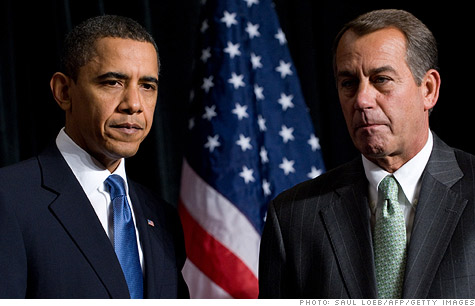
"Call it the Party-of-Government Paradox: If the nation’s capital looks dysfunctional, it will come back to hurt President Obama and the Democrats, even if the Republicans are primarily responsible for the dysfunction.
Then there is the Bipartisanship Paradox: No matter how far the president bends over backward to appeal to or appease the Republicans — no matter how nice, conciliatory, friendly or reasonable he tries to be — voters will judge him according to the results. And the evidence since 2009 is that accommodation won’t get Obama much anyway.
...A Pew Research Center survey released last week showed Obama with a 49 percent disapproval rating, but Congress with a 70 percent unfavorable rating. So Obama is still “ahead.” The Democrats are also better regarded than the Republicans — or, perhaps more accurately, less poorly regarded. “Only” 50 percent of respondents had an unfavorable view of the Democratic Party; 59 percent had an unfavorable view of the Republican Party.
But the trend on the president’s numbers has been downward, and the Republicans seem willing to pay a high price to keep them moving that way. Remember: The core GOP argument is that government can’t do much good and generally makes everyone’s life worse. Democrats are the ones who insist that government can solve problems and improve people’s lives. If government isn’t doing that — if it is discredited and made to look foolish — guess whose side of the debate is weakened?
Obama’s central task is to break out of the three paradoxes, not just to get reelected but also to get anything done. Having tried conciliation, his only alternative is to build pressure on the Republicans. He needs to get them to act, or, failing that, to make clear who is responsible for Washington’s paralysis..."
THE WASHINGTON POST: Obama’s paradox problem
Words.
"Call it the Party-of-Government Paradox: If the nation’s capital looks dysfunctional, it will come back to hurt President Obama and the Democrats, even if the Republicans are primarily responsible for the dysfunction.
Then there is the Bipartisanship Paradox: No matter how far the president bends over backward to appeal to or appease the Republicans — no matter how nice, conciliatory, friendly or reasonable he tries to be — voters will judge him according to the results. And the evidence since 2009 is that accommodation won’t get Obama much anyway.
...A Pew Research Center survey released last week showed Obama with a 49 percent disapproval rating, but Congress with a 70 percent unfavorable rating. So Obama is still “ahead.” The Democrats are also better regarded than the Republicans — or, perhaps more accurately, less poorly regarded. “Only” 50 percent of respondents had an unfavorable view of the Democratic Party; 59 percent had an unfavorable view of the Republican Party.
But the trend on the president’s numbers has been downward, and the Republicans seem willing to pay a high price to keep them moving that way. Remember: The core GOP argument is that government can’t do much good and generally makes everyone’s life worse. Democrats are the ones who insist that government can solve problems and improve people’s lives. If government isn’t doing that — if it is discredited and made to look foolish — guess whose side of the debate is weakened?
Obama’s central task is to break out of the three paradoxes, not just to get reelected but also to get anything done. Having tried conciliation, his only alternative is to build pressure on the Republicans. He needs to get them to act, or, failing that, to make clear who is responsible for Washington’s paralysis..."
THE WASHINGTON POST: Obama’s paradox problem
Subscribe to:
Posts (Atom)